
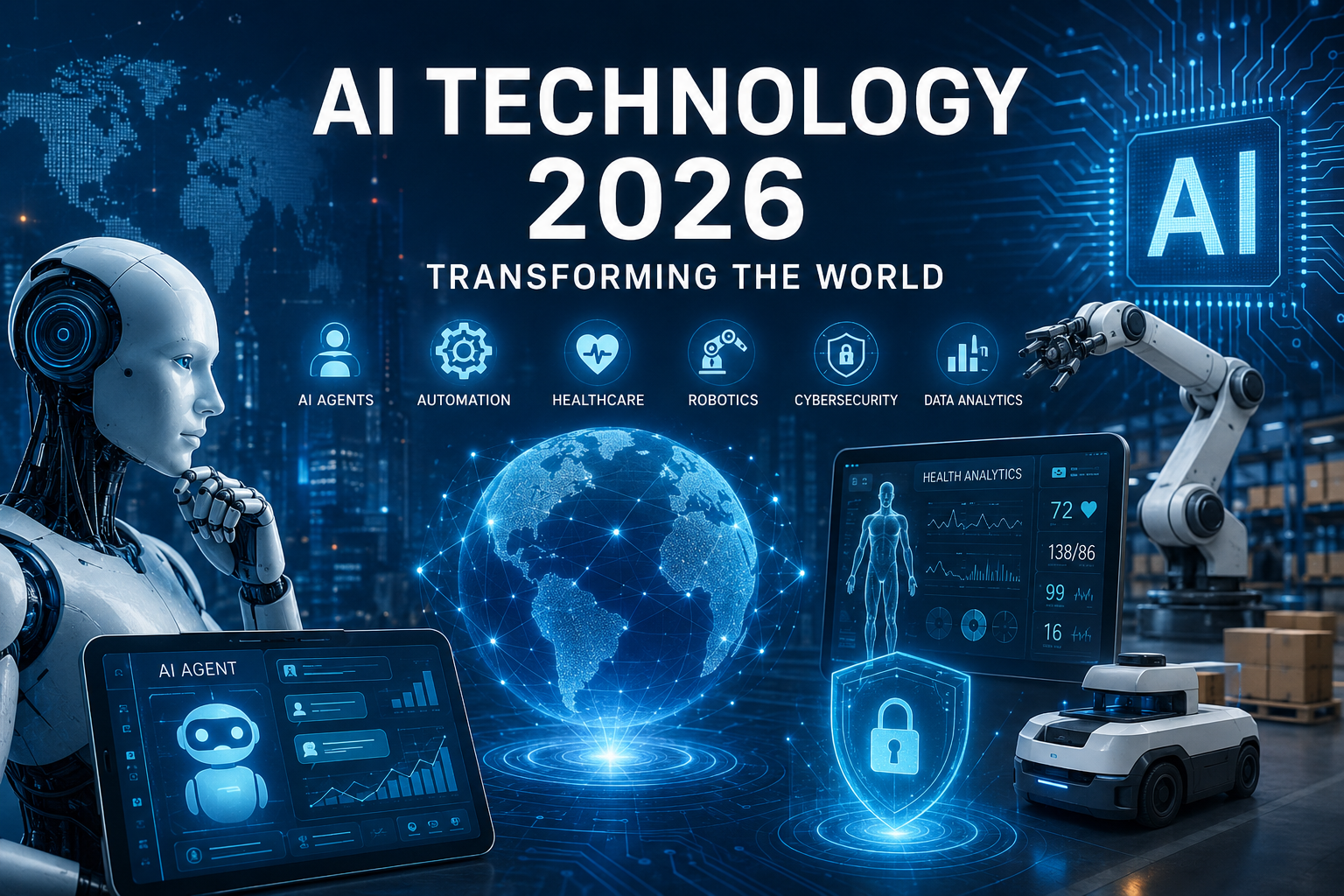
Artificial Intelligence (AI) continues to evolve at an unprecedented pace, becoming one of the most influential technologies across industries. In 2026, AI is no longer limited to chatbots or content generation. Businesses, healthcare providers, financial institutions, and manufacturers are integrating advanced AI systems to automate complex workflows, improve decision-making, and create entirely new digital experiences.
The latest wave of AI innovation focuses on autonomous AI agents, multimodal intelligence, enterprise automation, robotics, and highly personalized user experiences. As competition among technology companies intensifies, AI is becoming smarter, faster, and more accessible than ever before.
Autonomous AI Agents Are Becoming the New Digital Workforce
One of the biggest developments in AI is the rise of autonomous AI agents. Unlike traditional AI assistants that only respond to prompts, AI agents can independently perform multi-step tasks, interact with software applications, analyze information, and make decisions with minimal human intervention.
Businesses are adopting AI agents to:
- Manage customer support
- Automate financial reporting
- Schedule meetings
- Generate software code
- Analyze business data
- Handle administrative tasks
These intelligent systems significantly reduce operational costs while improving productivity.
Multimodal AI Is Changing Human-Computer Interaction
Modern AI models now understand multiple types of information simultaneously, including:
- Text
- Images
- Audio
- Video
- Documents
- Programming code
This capability, known as multimodal AI, enables users to upload images, ask questions about videos, analyze PDFs, and receive comprehensive responses within a single AI system.
The technology is transforming education, digital marketing, engineering, healthcare, and customer service.
AI in Healthcare Reaches a New Level
Healthcare remains one of the industries benefiting the most from AI innovation.
Faster Disease Detection
AI systems can analyze medical images and detect abnormalities more quickly than traditional methods, assisting healthcare professionals with earlier diagnosis.
Personalized Treatment Plans
Machine learning algorithms analyze patient history, genetics, and lifestyle data to recommend customized treatment strategies.
Drug Discovery
Pharmaceutical companies are using AI to accelerate drug development, reducing research timelines from years to months.
Enterprise AI Is Driving Business Transformation
Organizations worldwide are investing heavily in enterprise AI platforms.
Intelligent Automation
AI automates repetitive office tasks including:
- Invoice processing
- Data entry
- Document summarization
- Customer email responses
- Business analytics
Predictive Analytics
Companies use AI to forecast:
- Customer demand
- Market trends
- Inventory requirements
- Financial risks
Predictive AI helps executives make more informed strategic decisions.
Robotics Powered by Artificial Intelligence
AI-powered robots are becoming increasingly capable in manufacturing, logistics, agriculture, and healthcare.
Smart Manufacturing
Factories deploy AI robots that can:
- Detect defects
- Perform quality inspections
- Optimize production lines
- Predict equipment failures
Warehouse Automation
Autonomous robots can transport goods, organize inventory, and improve order fulfillment with greater efficiency.
Cybersecurity Gets Smarter with AI
Cyber threats continue to evolve, making AI an essential component of modern cybersecurity.
AI systems monitor network traffic in real time, detect suspicious behavior, identify malware, and automatically respond to potential attacks before significant damage occurs.
This proactive approach helps organizations strengthen digital security while reducing response times.
Generative AI Continues to Expand
Generative AI remains one of the fastest-growing sectors in technology.
Today’s models can create:
- High-quality articles
- Professional images
- Computer code
- Videos
- Music
- Marketing content
- Business reports
Companies increasingly integrate generative AI into daily operations to improve productivity and accelerate content creation.
AI Regulation and Responsible Development
As AI adoption accelerates, governments and technology companies are placing greater emphasis on responsible AI development.
Key priorities include:
- Data privacy
- Transparency
- Fairness
- Bias reduction
- Security
- Human oversight
Responsible AI practices are becoming essential for maintaining public trust and ensuring long-term innovation.